- Marketing Mastery Newsletter
- Posts
- How Figma grew to a $20 billion acquisition offer — without a single cold call
How Figma grew to a $20 billion acquisition offer — without a single cold call
Adobe didn't offer $20 billion for the product. They paid for what surrounded it.

Marisha Lakhiani
April 06, 2026
In 2016, a designer posted one line on Twitter:
"We're doing a design party."
He dropped a link to a Figma file and invited anyone to join.
Within 48 hours, thousands of designers from around the world had piled in. Some were building interfaces. Some were leaving comments. Some were just watching, in real time, as strangers designed things together — something that had never been possible before.
Dylan Field, Figma's 24-year-old CEO, spent those 48 hours doing something very different from celebrating.
He was firefighting.
The servers were collapsing under the weight of it.
But even as the product strained to hold up, Dylan understood something that most founders miss: the party wasn't an accident. It was proof of something far more valuable than software.
Here's the context that makes this story matter.
When Figma launched in 2016, designers were not looking for a new tool.
They had Adobe Photoshop. They had Sketch. Tools they'd spent entire careers mastering. Tools their teams had built workflows around. You don't abandon something like that for a browser-based startup that crashed when too many people showed up at once.
And yet, within six years, Adobe offered $20 billion to acquire Figma — an offer later described by analysts as one of the largest software acquisitions in history.
So what happened?
The product improved, yes. But Figma wasn't the only design tool that improved between 2016 and 2022.
What Figma had — and what Adobe was actually paying $20 billion for — was a community that had become impossible to compete with.
What Dylan Field understood about growth that most founders don't
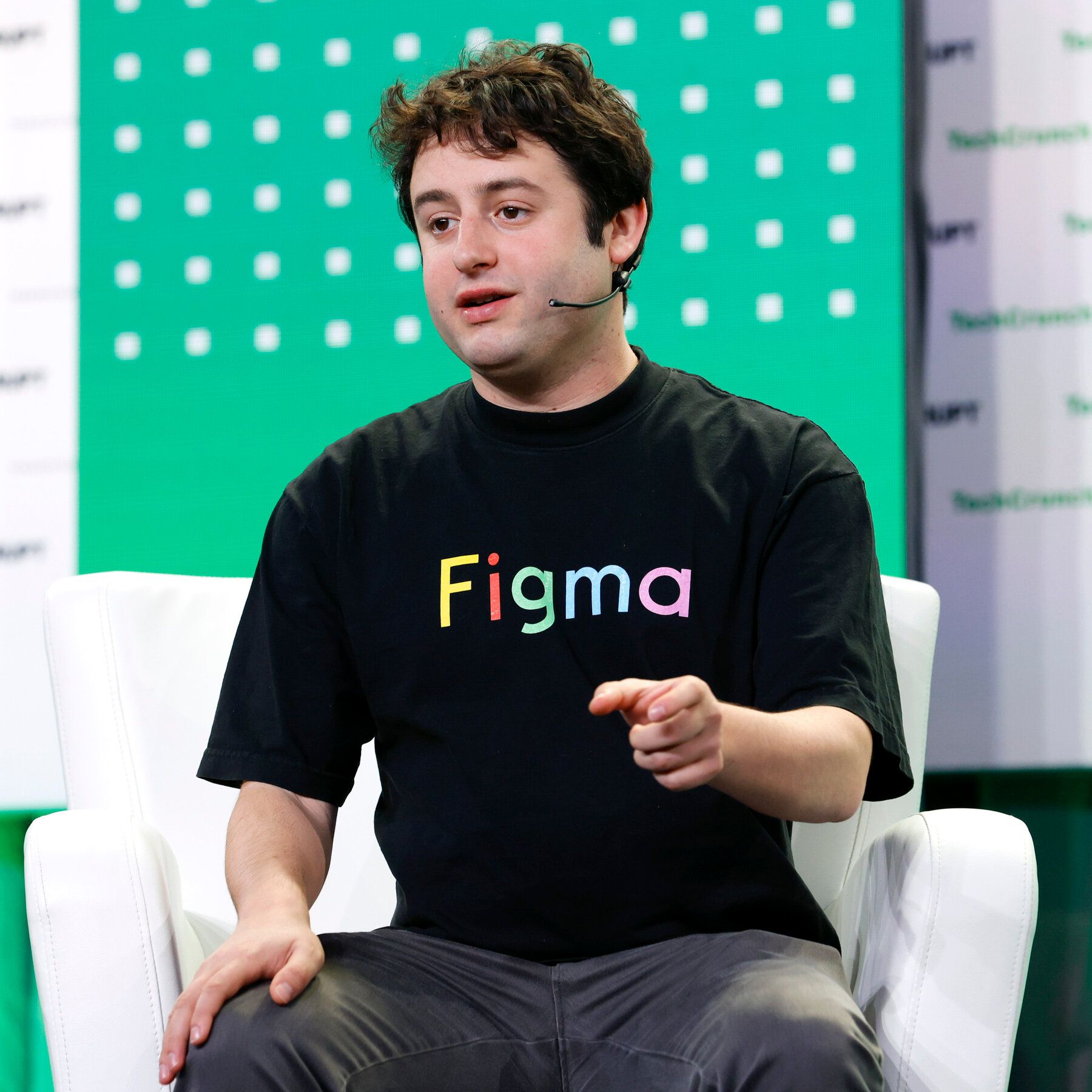
Before Figma had a marketing budget, before it had a sales team, Dylan and his first marketing hire Claire Butler were doing something that looked almost embarrassingly low-tech.
They were going to design meetups. One city at a time. Sitting with designers, watching them use the product, listening to what frustrated them.
In 2018, Dylan flew to Lagos, Nigeria — a move so unusual for a Silicon Valley CEO that people who worked in the local tech scene still remember it. Not to pitch. Not to sell. Just to meet designers where they were.
Those conversations built something that no ad spend could have.
They turned early users into evangelists.
Those evangelists started sharing Figma files publicly. Posting UI kits on social media. Creating tutorials on YouTube. Building entire businesses around teaching other designers how to use the product.
And that's when the real growth engine switched on.
The three loops that turned Figma into a movement
Loop 1: The knowledge loop.

Every community member who published a tutorial, answered a question in a forum, or shared a walkthrough added to a knowledge base that kept growing without Figma paying for it. A designer in Berlin learns from a tutorial written by a designer in São Paulo. That Berlin designer, six months later, writes her own. The loop compounds.
Loop 2: The showcase loop.
Design produces visible outputs. When you use Figma to build something beautiful, the natural instinct is to share it. Every shared file, every posted UI kit, every "made this in Figma" tweet became distribution. By 2022, Figma's community platform was seeing over 1,600 new resources published every single day — created by users, not Figma.
Loop 3: The creator loop.
Some users went further. They built entire businesses on top of Figma: paid template libraries, YouTube channels, Gumroad courses, consulting practices. These creators had a direct financial incentive to keep growing Figma's audience. Their success depended on it.
Each loop fed the others.
The result was a growth engine that kept running whether or not Figma's team was working. And a moat that competitors — including Adobe, with its $15 billion in annual revenue — couldn't replicate by writing a check.
The lesson most founders miss
When you hear this story, the tempting takeaway is: build a community.
But that's not what Dylan did first.
He fixed his product until it earned one.
The design party in 2016 worked because Figma had finally solved something genuinely hard — real-time collaborative design in a browser. The community that formed wasn't engineered. It emerged from a product that gave people something worth gathering around.
The pattern holds across every company that has built this kind of growth:
Notion reached a $10 billion valuation because it built something flexible enough that users wanted to show others what they'd made in it.
Webflow crossed $4 billion because it gave designers a new capability they'd never had — and designers, by nature, show their work.
In each case, the question wasn't how do we build a community? It was what are we building that's worth a community forming around?
That question is one most founders never stop to ask.
They're too busy buying traffic. Hiring setters. Wondering why their cost per lead keeps rising and their conversion rate keeps falling.
The more uncomfortable version of this lesson
Here's where the Figma story stops being about community and starts being about your business.
Figma didn't grow by spending more. It grew by building something that spread on its own — and then removing every friction point that slowed that spread.
That's exactly the opposite of what most online businesses do when growth slows.
They add budget. They hire. They run more ads to a funnel that was already leaking.
More traffic to a page that's converting at 12% when it should convert at 28% doesn't fix anything. It scales the problem.
The businesses I've watched scale past $5M, $10M, $20M didn't get there by outspending the market. They got there by doing what Dylan did in those early Figma days — sitting with their funnel, watching where people fell off, and fixing it.
Sometimes the fix is a single headline change on a registration page.
Sometimes it's a confirmation sequence that's killing show-up rate.
Sometimes it's a pitch that makes people say "let me think about it" instead of "I'm in."
The revenue was already there. It was just leaking.
If you're wondering whether that's happening in your funnel right now — it probably is.
The question is whether you can see it from the inside.
Most founders can't. They're too close to the copy they wrote, the offer they built, the funnel they've stared at for months.
That's why I do what I do.
Tell me where you are right now — revenue, traffic, where you think you're losing people — and I'll come back with an honest answer: whether there's a leak worth fixing, and what it would take to fix it.
This is not a sales call. It's a diagnostic.
And in 15 years of doing this — scaling Mindvalley from $30M to $150M, helping We Conquer Media drive over $1 billion in client results — I've never run a proper audit and found nothing.
There is always something.
The only question is whether you want to find it before your competitors do.
— Marisha
P.S. I've already been booked 23 times this week and only have 5 more slots available this month. So if you're dealing with low conversion rates, poor show-up rates, or pitches that aren't closing — grab your spot before they're gone.